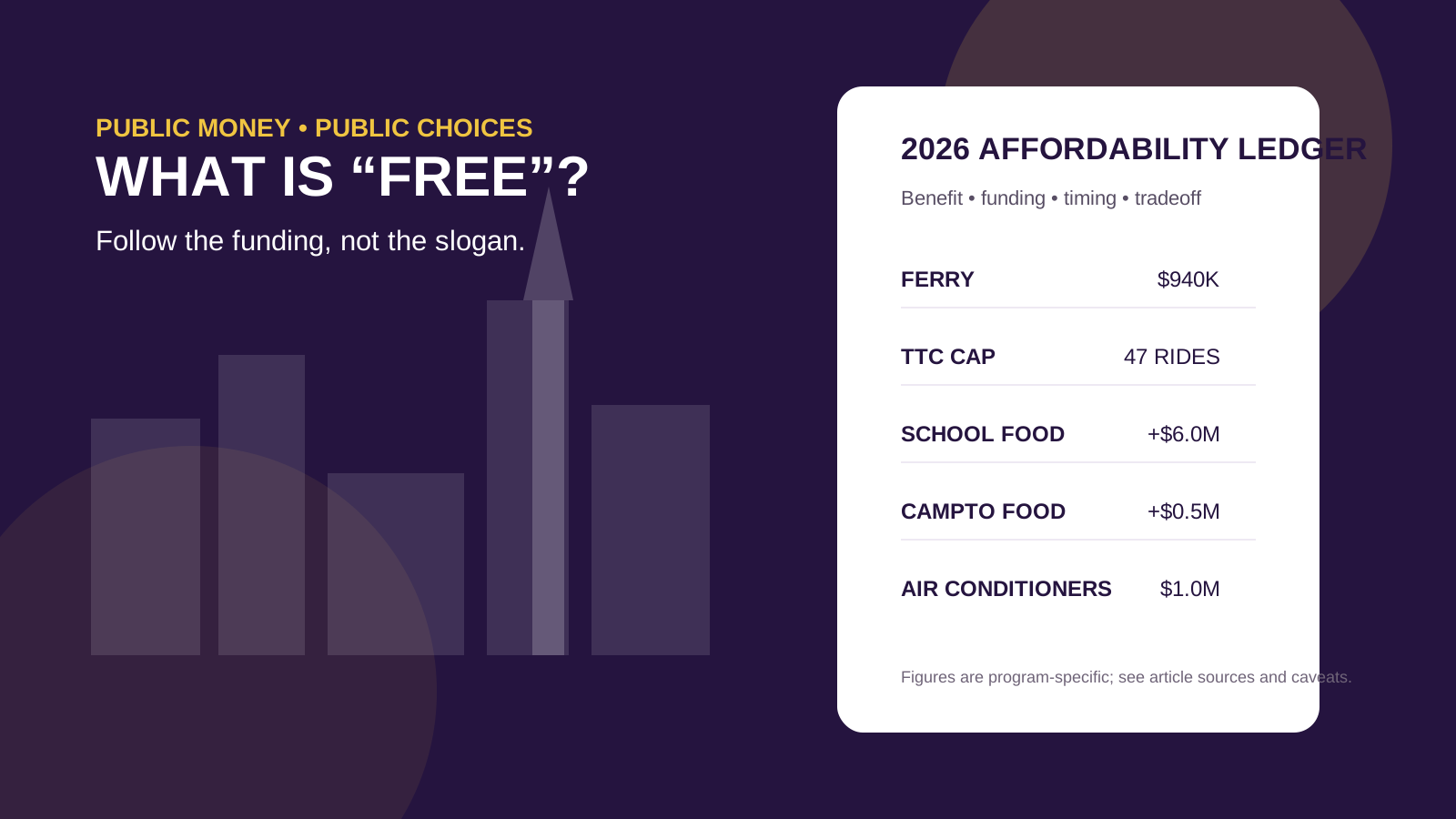
There is a documented 2026 pattern of City-funded affordability measures promoted with the language of “free” or reduced-cost service. The timing is legitimate political context, but it does not establish that the programs were created to buy votes. Several programs predate the formal campaign, some are expansions of earlier pilots, and most required Council or TTC approval rather than unilateral mayoral action.
What the public record establishes
Who controlled what
Municipal decisions
The mayor proposed priorities and publicly promoted them, but Council, the TTC Board, City agencies and staff each held formal authority over different measures. The ferry waiver was a Council vote. Student nutrition funding was approved by Council. TTC fare capping was implemented through the TTC budget and agency.
Campaign promises are different from adopted policy
The September 11 weekly TTC cap is an election commitment. It should be labelled as a proposal unless and until a future Council and TTC process adopts and funds it.
Chow’s position and the case for the policies
Chow has framed fare capping, school food, CampTO nutrition and other benefits as affordability measures that lower household costs. The City also presents school food as a food-security measure and the air-conditioner program as protection for vulnerable residents during extreme heat. Those policy objectives are relevant when assessing value, not just the price tag.
Accountability analysis
A legitimate criticism is about tradeoffs and targeting: whether universal or broadly available benefits are the best use of limited municipal dollars, whether foregone user-fee revenue should instead support core service reliability, and whether recurring affordability measures have durable funding. Another legitimate question is timing: several high-visibility benefits were implemented or promoted close to the October 26 election. Timing alone, however, is not proof of an improper electoral motive.
The clearest fiscal comparison is to put each benefit beside its funding source and permanence. A one-month ferry waiver financed through a one-time allocation is different from an ongoing fare policy; a $6-million expansion is different from the full annual school-food budget; and an election promise is different from a funded City program.
Claims this article does not make
Do not say Chow “made the TTC free”; the cap applies only after a paid-trip threshold. Do not describe the entire $31.170-million student nutrition allocation as a new 2026 giveaway. Do not say Chow alone created the free ferry month; the official motion was moved by Deputy Mayor Ausma Malik and seconded by Chow. Do not state that the programs were designed to buy votes unless evidence of that motive emerges.
Questions to track
- What is the full annualized cost of the 40-trip monthly TTC cap and any weekly replacement?
- Which 2026 affordability measures are one-time, pilot-based or recurring?
- How are universal benefits evaluated against targeted assistance for lower-income residents?
- What service or capital alternatives were forgone when fees were waived or revenues replaced?
- After the election, which campaign promises are adopted, modified or dropped?
Sources and evidence
- City Council: free August ferry rides ↗Official
- TTC: monthly fare capping launches September 1 ↗Official
- CityNews: weekly fare-cap campaign promise ↗Reporting
- City Council: 2026 student nutrition subsidies ↗Official
- City: CampTO nutrition expansion ↗Official
- City: Air Conditioner Assistance Program expansion ↗Official
- City: final 2026 budget ↗Official
This page separates adopted policy from campaign commitments and distinguishes total program budgets from incremental 2026 expansions.